Do any pubs in Guildford serve Ritalin in pints?
1 Like

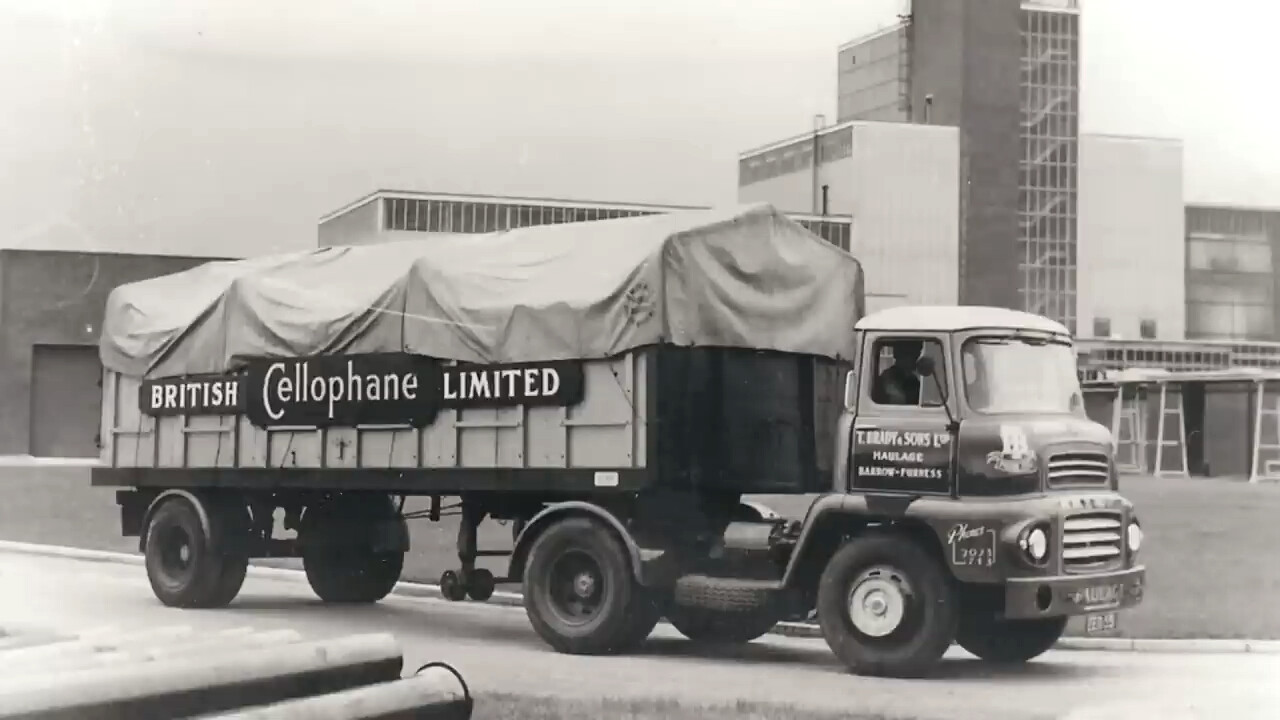
Yes, in 1969 BRS (then under National Freight Corporation) wanted to develop a unit that would take them into the ‘70s and meet most general haulage needs. Walter Batstone, Executive Director of Engineering at BRS was impressed with the latest Scanias and wanted to use a British manufacturer to produce something similar to replace the ageing nationalised Bristols. He wanted to develop a versatile chassis that would accept a variety of drivelines. BRS was already impressed with the Rolls Eagle.
In cahoots with Scammell BRS made no fewer than 22 prototype Crusader 4x2s and for two years they tested them intensively over their long-distance routes. They looked at various cabs but chose Motor Panels, though why they chose a non-tilting cab is perplexing.
The Rolls 280 performed well but they opted for the Rolls 220 version of the Eagle in the end, though both engines continued to be offered. BRS used 280s on their Continental trips. Then they adopted the Rolls 265 coupled to the Fuller RTO 9095A. They didn’t bother with sleeper cabs till 1972. The new Crusader became the most cost-effective 32-tonner on the fleet until the Leyland Roadtrain arrived. They used the Crusader till 1978. They are reported to have given very little trouble.
I hope that helps!
Ro
2 Likes
No, the new rule (under Labour) is that you have to unremittingly spout deranged crap about constant-mesh gearboxes (got that from Rachel Reeves herself this morning  ).
).
4 Likes
Are you suggesting I wasn’t elite? 
2 Likes
That he, himself has never used or seen. 
It was a deflection from gearboxes to be fair but why didn’t they just buy Scammell Crusaders if it was their input on design?
To be fair I seem to be the only one advocating driving a manual box with judicious use of the clutch.Not like an automatic..
As I said down shifting on entry to the roundabout or in fact any hazard is obvious.
‘But’ the torque sensing will mess up preselecting an ‘upshift’ for the ‘exit’ if/when you lift the throttle on entry.
As I’ve said before all of the clutch only actuated splitters were way better also allowing proper rev matching of the shift before re engaging the clutch.The ZF 12 speed in the DAF 2800 was my favourite box.Superior to whatever it was in the MAN that I drove sure it was a 13 speed impossible to confuse with a twin split.
But which was a torque sensing splitter either way and remembered it then for its unwanted and uncommanded split shifts.Was happy to get back to every other sensible clutch only actuated option from DAF to Scania.
Rubbish indeed.
1 Like
Shifting a constant mesh box without using the clutch ain’t something to be proud of.
Confused the 15 speed Fuller because it’s variously described, as anything but the 15 speed range change box in three ranges of 5 controlled by two different range change switches, that it should be described as.
Don’t use a sheet to secure/restrain a load.I can live with that.
1 Like
Yes, Suedehead2 also deflected from the gearbollox and I intend to cease answering any more drivel from the culprit.
To answer your question. Scammell had already started developing the Crusader as a 6x4 export design with a Motor Panels day cab, Detroit engine and 15-sp Fuller box for the Australian market. So they just thought a new 4x2 BRS-spec venture would be a good idea. Don’t forget that in ‘69 a nationalised company like BRS would be looking to buy British as a sort of passive protectionism. Of course they went on to buy Scanias, DAFs, Volvos et al when it became more fashionable in the ‘70s; but more importantly to evaluate other makes & models to try and improve on what they’d got.
BRS had always been eclectic by default, having commandeered dozens of different makes and models under initial nationalisation; so it was always accustomed to having a varied stable.

I wont mention the comfort switch then that was fitted to the dreadful 440 6x4 MAN i drove with a ZF 16 speed box
1 Like
If you want REAL elite look no further than our Leatherhead correspondent. He’s in a class of his own, a class we should all aspire to.
2 Likes
Why would it do that? If you want to change up as you leave the roundabout, you preselect a higher gear and it just goes through - simple! You don’t think I would have entertained negotiating Damascus’s traffic with a box that I wasn’t in complete control of, do you?
This is a highly sophisticated 1980s constant-mesh twin-layshaft design, not a dog-clutch model T Ford ffs. For the umpteenth time, its designed to be used without the clutch where possible, as indeed were all other Fuller ‘boxes btw.
Because you never used one. That’s why you are confused about the Twin-Splitter. I’m confused about why you continue to lecture us on its use.
No they weren’t! Which is precisely why, in the ‘70s they connected the switch directly to the the sender instead of through the clutch servo: precisely because that legitimately enabled clutchless changes.
No you’re not! I, and others have, all along advocated judicious use of the clutch. Judicious means you judge whether or not it is safe and legitimate to gearshift without it. Duh!
You are a clown, CF. I refuse to continue this ‘debate’ as, apart from having been through it all before ad nauseam you are clearly learning zero from what others are helping you to understand. We’re deffo wasting our time and have already polluted yet another good thread in the name of including care-in-the-community members, dare I say. So Roger ‘n out!
Our perks amounted to Green Shield stamps, oh and the odd gallon of petrol for personal use only, caught nicking petrol from new cars was a sackable offence no ifs no buts having said that our TM was involved himself so use of a teaspoon was in preference to a shovel if you get what I mean.